History Council of South Australia Fellowship
Fellowship
The HCSA Fellowship provides support for all Australians researching and writing about South Australian history. The Fellowship is an annual prize of $2,000.
In addition to the prize, the State Library of South Australia will provide space in the library for the Fellowship winner to conduct their research, as well as the use of a computer and up to 10 hours of research support.
The selection of the annual Fellowship holder will be by a competitive process.
Fellowship holders will be expected to make use of the resources and support of the State Library of South Australia and, where appropriate, other South Australian cultural institutions and repositories in pursuing a dedicated program of historical research. Access to relevant resources and support will be facilitated by the HCSA in collaboration with the relevant institution(s) where the research activity is to be carried out.
The duration of the research work undertaken will be determined by the Fellowship holder in consultation with the HCSA and relevant institutions.
It is a requirement of the Fellowship that the holder will give a presentation on the research project and its findings at the completion of the Fellowship year.
Full terms and conditions, including eligibility, are available here.
Applications for the 2027 HCSA Fellowship are now closed. The 2027 HCSA Fellow will be announced in November.
Applications for the 2028 HCSA Fellowship will open on 1 August 2027.
Fellowship Description
A key objective of the HCSA is to promote research, writing and publication of South Australian history.
To this end, the HCSA Fellowship was launched on 21 August 2020 in association with the State Library of South Australia and through the generous support of donors, including the Marsden Szwarcbord Foundation.
The purpose of the Fellowship is to encourage the discovery, analysis and exploration of South Australia’s history, and to help increase public engagement with a topic that has ongoing relevance to a broader Australian history and society today.
2026 HCSA Fellow
In 2025, the History Council of South Australia received 11 applications for the annual HCSA fellowship program on a diversity of topics, disciplinary and interdisciplinary intersections. The strongest applications demonstrated thoughtful engagement with the State Library of South Australia’s collections and framed their research within wider contexts, enabling new and compelling interpretations of South Australia’s history.
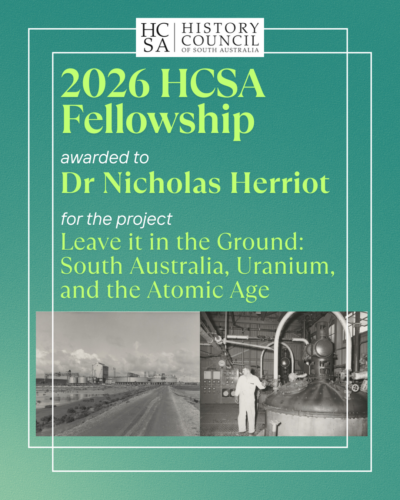
In 2025, the judges unanimously awarded the HCSA Fellowship to Dr Nicholas Herriot for his project Leave it in the Ground: South Australia, Uranium, and the Atomic Age.
2025 HCSA Fellow
In 2024, the History Council of South Australia received 9 applications for the annual HCSA fellowship program on a diversity of topics, disciplinary and interdisciplinary intersections. The judges were particularly impressed by applications which were well-acquainted with resources in the State Library of South Australia and situated within broader contexts with the potential to shed fresh light on the South Australian story.
Together, the 2024 applications confirm there is rich and dynamic research activity being conducted on the state’s past throughout South Australia, whether this concerns the institutional life of women and children, the impact of art and architecture, religion and immigration or the biographies of famous and infamous South Australians.
In 2024, the judges unanimously awarded the HCSA Fellowship to David Reilly for his project which will trace the introduction and cultivation of date palms in South Australia. Reilly’s project is a historical journey from the military parade grounds in Adelaide to remote outback towns. It is intertwined with the history of the Muslim cameleers, the Overland Telegraph Line, the Ghan railway, Mound Springs, Great Artesian Basin, indigenous lands, and outback cattle stations and engages with well-known figures such as botanist Baron Ferdinand von Mueller, the Chaffey brothers, industrialist Essington Lewis, and Reverend John Flynn.
Co-director of the Marsden Szwarcbord Foundation, Dr Susan Marsden was impressed by the project’s novel topic and scope with a potential for arousing broad public interest, and for demonstrating how historical projects can be done by all Australians, not only professional historians.
Chair of the judging panel, South Australia’s History Advocate, Dr Kiera Lindsey, highlighted the potential for this environmental history to explore new connections between regional and urban contexts while also drawing attention to the distinctive ways humans are constantly shaping and reshaping South Australia.
For fellow judge and SLSA team Leader of Research & Discovery, David Brooks, it was the project’s ability to tell a surprising and engrossing story about South Australia’s multicultural history while also examining the state’s agricultural and environmental histories that proved most compelling. ‘The project certainly promises to provide South Australia with a unique “date with history”’, he joked.
Date Palm History of Australia
Abstract: This is a historical record following the introduction and cultivation of date palms in Australia. From the military parade grounds in Adelaide through to remote outback towns, this story takes the reader on a historical journey that is intertwined with Muslim cameleers, the Overland Telegraph Line, the Ghan railway, the Mound Springs, the Great Artesian Basin, indigenous lands, and outback cattle stations.
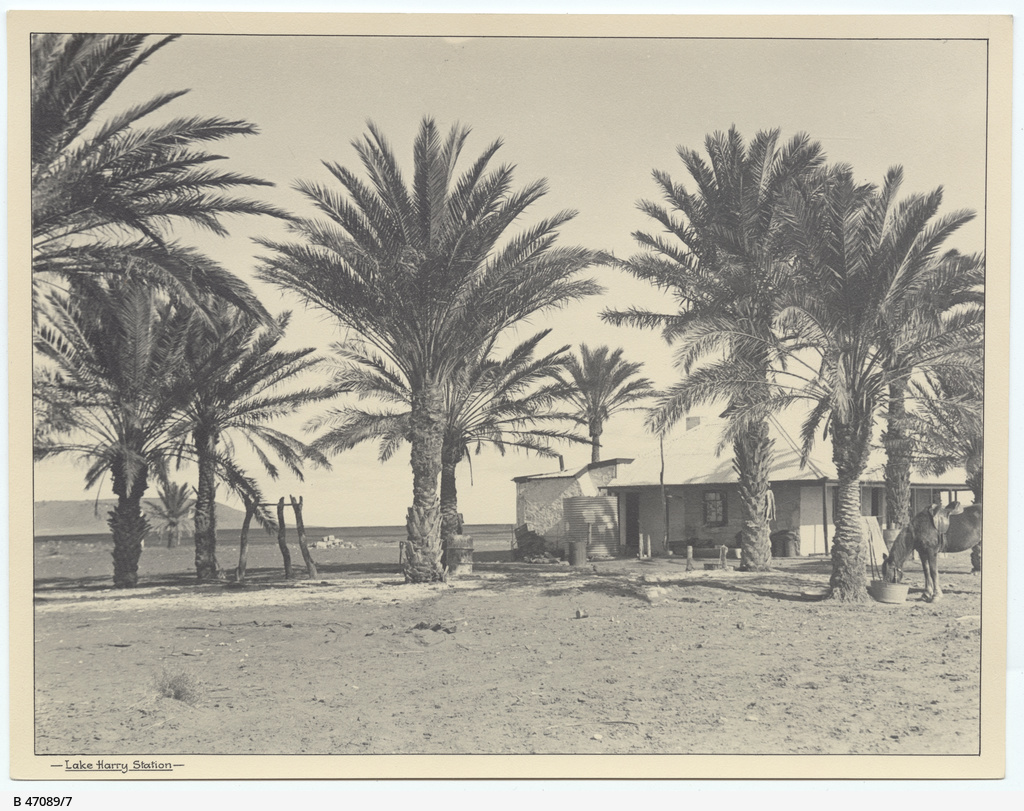
This publication catalogues the history of date palms in South Australia, covering the first recorded planting in Tanunda in the 1850s by Lutheran missionaries, the gift of Algerian date palms from the French government, the importation of date palms from Karachi, and the extraordinary effort the early colonial government went to around the turn of the 20th century to establish a date industry in South Australia.
Many of these original date palms survive to this day and still stand tall and proud. Very few of the passersby know their stories. This publication is a tribute to not only too these magnificent trees but also to the vision of early pioneers to establish them.
The publication encounters some interesting individuals such as the famous botanist Baron Ferdinand von Mueller, the Chaffey brothers, industrialist Essington Lewis, and the Reverend John Flynn.
Photo credit: Lake Harry Station date palms, photograph by E.L. Walpole c1930. State Library of South Australia collection, B 47089/7
About David Reilly: Growing up across rural Australia, David Reilly is well-acquainted with nation’s inland. His first career as a stock agent took him all throughout the country where he witnessed firsthand the arid and harsh landscapes, along with the challenges and opportunities they present.
In 1993, when exploring options for salt-tolerant crops, he first came across date palms. What originated as research for his own foray into growing dates quickly became a fascination with the rich history of date palms in Australia. Stumbling across previously unknown records fueled his interest in the idea of a publication about this often-overlooked history. Following his research around the globe – from the deserts of the Middle East and North Africa to the arid western United States and Mexico – Dave has dedicated his life to the understanding of date palms.
On their intergenerational family farm in the Riverland South Australia, Dave and his family have spent the last 26 years expanding their date palm operations, importing over 40 cultivars, becoming a registered research and development site, and quickly making their name as the date palm experts of Australia. Dave is passionate about exploring forgotten histories and leaving a legacy behind for future generations to build upon.
2024 HCSA Fellow
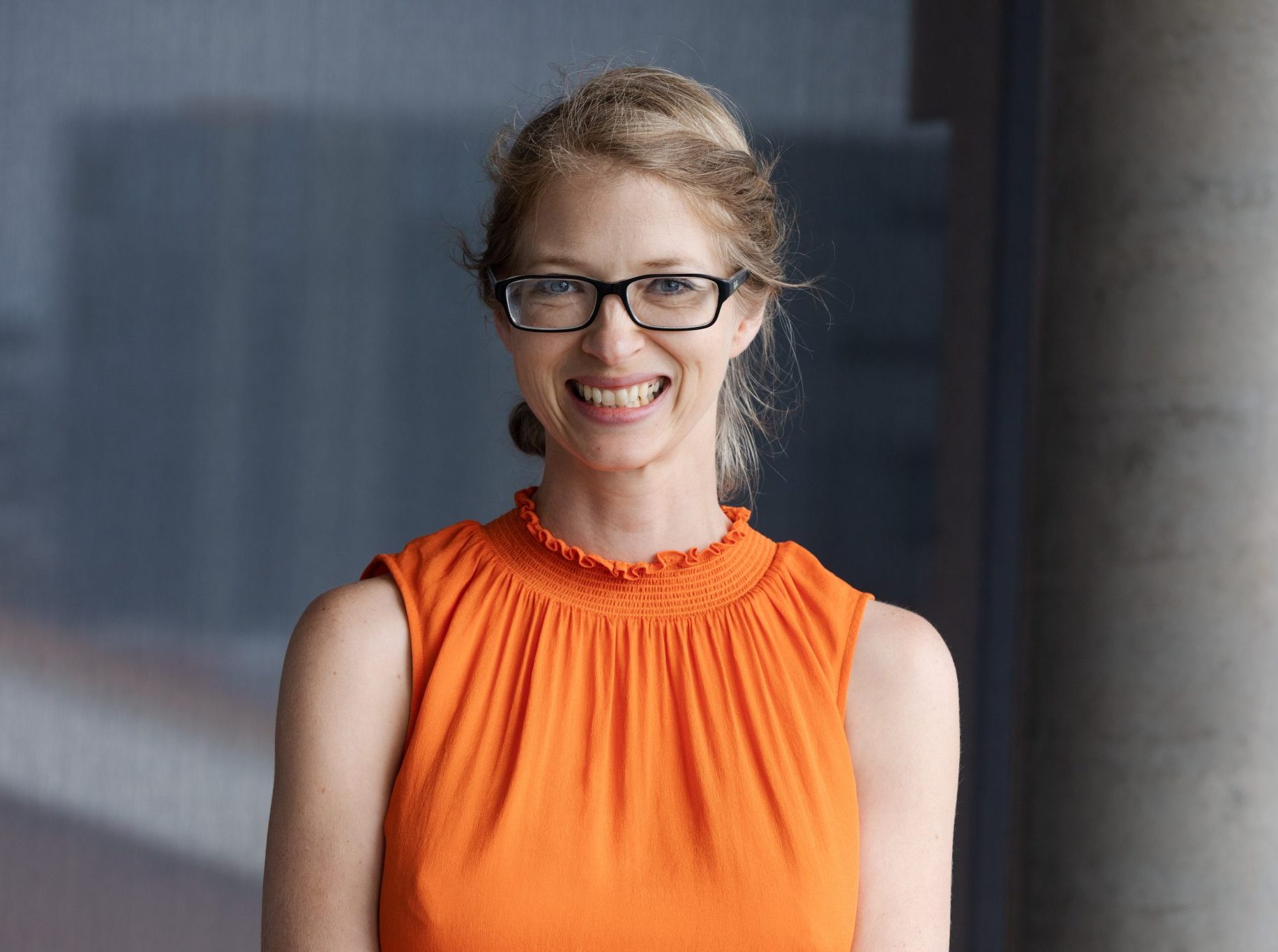
The HCSA would like to congratulate the 2024 HCSA Fellow: Dr Alice Neikirk
Project Title: ‘Police Matrons (and their Advocates) in South Australia’
Abstract: This year marks the 125-year anniversary of the first official recognition of a police matron in Australia, and yet few have ever heard about these working women. It is also not obvious from the designation of ‘first police matron’ that women worked in this role for at least fifty years before receiving official recognition. This is unfortunate because these women opened the door for females to move into the police force, yet their role is still either completely unrecognized or dismissed as an extension of her husband's policing duties. The State Records of South Australia have what appears to be the largest collection of police matron diaries in Australia. This is an invaluable resource to help us understand what these women did, how they contributed to the integration of women into policing, and their role in Australian history. The State Library of South Australia houses several microfilmed resources regarding the advocacy work that supported the appointment of police matrons. Bringing these two resources together will help underscore the role of female-led organizations, like the Woman’s Temperance League, had in social reform. This study will also contribute to a deeper understanding of women’s experiences in Victorian era Australia.
Judges' Citation:
Dr Alice Neikirk has a PhD from the Australian National University and is currently a Lecturer in Criminology in the School of Law and Justice at the University of Newcastle. In her teaching, she uses historic artifacts to engage students with the history of policing and incarceration during the Victorian era. She has published extensively on the historical records associated criminal and international tribunals. A passionate believer in making knowledge accessible, she communicates her work via radio, podcasts, academic publications and The Conversation.
The judging panel awarded Dr Neikirk’s project for the 2024 HCSA Fellowship because it promises to combine individual and institutional histories in ways that not only engage with a specific area of history that is yet to be investigated but also yield new insights about the hidden work of women which has long been relied on by the State and society. The fact that South Australia holds what appears to be the largest collection of police matron records in Australia, indicates the project is likely to produce findings of national significance, while Dr Neikirk’s comparative investigations into Police Matrons in the UK and North America also suggest this project will situate the South Australian story within fruitful international contexts.
Highly Recommended Prize
In addition to the contribution the Marsden Szwarcbord Foundation has made to the annual HCSA Fellowship, this year the Foundation has also made a gift of $1000 to award a Highly Recommended Prize to another applicant, whose project promises to make a unique contribution to South Australian research.
The recipient of the Highly Recommended Prize for 2024 is Dr Angela Gurr.
Project: ‘Combining historical records and archaeological methods to identified individuals in unmarked graves and increase understanding of their lifestyle challenges'
Abstract:
The aim of this study is to explore how combining information from historical documentation with advances in bioarchaeological analysis of human skeletons can enhance understanding of life histories and the identification of previously unidentified individuals from the past. A review of the accessibility of documentation will consider whether diverse information should be grouped into corpora and digitized to advance research opportunities through improved availability.
The project involves an extensive investigation of multiple sources of historical documentation including burial records, ships logs, applications for free passage to South Australia, official government registers such as death certificates, coroner’s inquest, state and local government land ownership records, 19th century newspapers, and historical rare books. These sources will be used to build life histories and potential identities for four unknown individuals excavated from unmarked graves in St Mary’s Church Cemetery, South Australia. South Australian historical records will contribute to the identification of individuals buried in the unmarked section of the St Mary’s Anglican Church Cemetery. When investigated in conjunction with the finding from the analysis of these excavated skeletons, these sources will provide information relating to their life histories, health, lifestyles and habits, occupation, and causes of death. Primary and secondary sources will be used to provide contextual background to their lives and those of their family before, during, and after migration to this new 19th-century colony.
Judges' Citation:
Dr Gurr has a Bachelor of Archaeology at Flinders University while her PhD from the University of Adelaide, ‘A view of colonial life in South Australia: An osteological investigation of the health status among 19th-century migrant settlers’, received the Dean’s commendation for Doctoral Excellence in 2023. Her interest in historical archaeology and the health of migrant settlers to South Australia led her to research the skeletal remains of a sample of 19th-century European individuals from St Mary’s Church Cemetery, SA. As a postdoctoral scholar she uses new bioarcheological techniques to examine the skeletons and allow more in-depth understanding of health challenges. The judges highly recommended this project as they recognised Gurr’s interdisciplinary methods Gurr have broader methodological application while also yielding fresh insight into previously unknown individuals at St Mary’s Church Cemetery and enriching our understanding of the early decades of the South Australian colony.
Past Fellows
2023: Mrs Margaret Boult, ‘The Apothecary and the Surgeon: Medical Responsibility and Care in Early South Australia’'. Read more here.
2022: Dr Heidi Ing, ‘Settler-Colonial Land Speculation: Investors in South Australia’s ‘Town Acres’’. Read more here.
2021: Dr Rebecca Jones, ‘Drought, flood, heat and dust: living with extreme weather in arid Australia’. Read more here.
How Can You Help?
Any donation no matter how small is welcome and can be submitted via the DGR (deductible gift recipient) platform.